Blog
PRP vs PRF for Hair Loss: Which is Better for Men? | Birmingham Clinic

PRP vs PRF for Hair Loss – Which is Better for Men?
Hair thinning and male pattern hair loss can affect men at different stages of adulthood. While medications and hair transplantation remain established options for certain patients, regenerative treatments such as PRP (Platelet-Rich Plasma) and PRF (Platelet-Rich Fibrin) have become increasingly popular among men looking for non-surgical approaches to support existing hair follicles.
PRP and PRF both use components obtained from your own blood, but they differ in the way the blood is processed and how the resulting platelet preparation is delivered. This naturally raises an important question: PRP vs PRF for hair loss – which treatment is better for men?
The answer is not simply that one treatment is always better. Your type and stage of hair loss, the condition of existing follicles, treatment protocol, and individual response can all influence which option may be more appropriate.
What Is PRP Hair Treatment?
Platelet-Rich Plasma (PRP) therapy is a regenerative treatment that uses a concentrated preparation of platelets obtained from the patient's own blood.
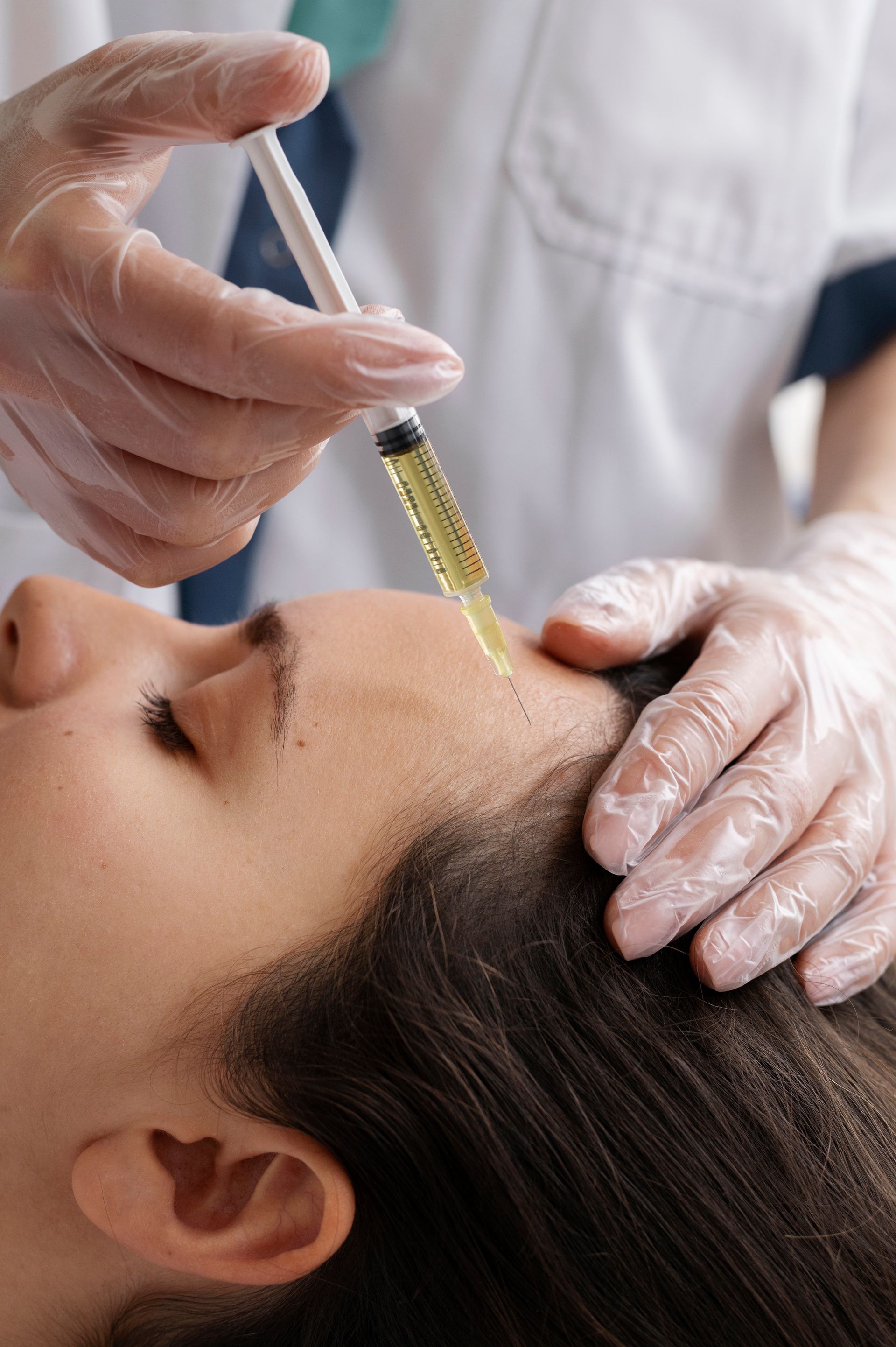
During a typical treatment, a small quantity of blood is collected and processed using a centrifuge. This separates the blood into different components, allowing platelet-rich plasma to be prepared. The PRP is then administered into targeted areas of the scalp where hair is thinning.
Platelets contain growth factors involved in tissue repair and cellular signalling. In hair restoration, PRP is used with the aim of supporting existing hair follicles and improving the environment surrounding them.
Clinical research into PRP for androgenetic alopecia is considerably more established than research into PRF. Studies and meta-analyses have reported improvements in hair density in selected patients, although protocols and individual outcomes vary.
What Is PRF Hair Treatment?
Platelet-Rich Fibrin (PRF) is another autologous treatment, meaning that the preparation comes from the patient's own blood.
PRF differs from conventional PRP primarily in its preparation. PRF protocols generally use different centrifugation conditions and create a preparation containing a fibrin matrix. This matrix can act as a scaffold for platelets and other cellular components.
One of the reasons PRF has attracted attention in regenerative treatments is its potential for a more sustained release of growth factors.
However, PRF should not simply be viewed as a guaranteed "better version" of PRP. Research into injectable PRF for androgenetic alopecia is still developing, and further high-quality studies are needed to determine its comparative effectiveness.
PRP vs PRF for Hair Loss: What's the Difference?
Although the treatments share the same basic principle of using the patient's own blood, there are several differences.
FeaturePRPPRFFull NamePlatelet-Rich PlasmaPlatelet-Rich FibrinSourcePatient's own bloodPatient's own bloodFinal PreparationPlatelet-rich liquid plasmaPlatelet-rich preparation with a fibrin matrixProcessingUses established PRP centrifugation protocolsUses different centrifugation conditionsAnticoagulantCommonly used during preparationTypically prepared without anticoagulantGrowth Factor DeliveryConcentrated platelet-derived growth factorsFibrin matrix may support more gradual releaseHair-Loss ResearchMore extensively studiedEmerging evidenceMain ObjectiveSupport existing follicles and hair densitySupport existing follicles through a fibrin-based regenerative preparation
The preparation protocol is important with both treatments. PRP and PRF are not single, universally standardized products, so techniques can differ between providers.
How Does PRP Work for Male Hair Loss?
Male pattern hair loss, medically known as androgenetic alopecia, involves progressive miniaturisation of susceptible hair follicles. Hair gradually becomes finer and shorter, eventually resulting in visible thinning.
PRP does not create completely new hair follicles. Instead, the treatment is intended to support follicles that are still present.
Research into PRP for androgenetic alopecia has reported potential improvements in measures such as hair density and hair count. This makes PRP particularly relevant to men experiencing early-to-moderate pattern thinning rather than expecting restoration of areas where viable follicles are no longer present.
How Does PRF Work for Hair Loss?
PRF follows a similar regenerative principle but incorporates a fibrin network into the preparation.
The fibrin matrix is of particular interest because it can provide a scaffold capable of retaining platelets and associated growth factors. Rather than focusing only on platelet concentration, PRF aims to create a biological environment in which regenerative components can remain active around the treatment area.
This theoretical advantage has made PRF increasingly interesting for hair restoration.
However, men considering PRF should understand an important distinction: a promising biological mechanism does not automatically mean PRF has been clinically proven to outperform PRP for male pattern hair loss.
PRP currently has a larger body of clinical research supporting its use in androgenetic alopecia.
So, Is PRP or PRF Better for Men?
There is no universal winner.
PRP may be considered when:
- You have early or moderate male pattern thinning.
- There are still active or miniaturised follicles in the affected area.
- You prefer a treatment with a larger existing body of hair-loss research.
- Your practitioner determines that PRP fits your overall hair-restoration plan.
PRF may be considered when:
- You are suitable for an autologous regenerative hair treatment.
- Your practitioner considers the fibrin-based preparation appropriate.
- You are interested in a treatment designed around more gradual growth-factor release.
- Your hair-loss assessment indicates that existing follicles may potentially benefit from regenerative treatment.
The decision should therefore be based on clinical suitability rather than choosing PRF simply because it is newer.
Is PRF More Effective Than PRP?
At present, there is not enough robust comparative evidence to say that PRF is consistently more effective than PRP for men's hair loss.
PRP has been investigated in multiple clinical trials and systematic reviews for androgenetic alopecia. Evidence for injectable PRF is promising but less extensive.
This distinction is important when researching treatments online. Terms such as "next-generation PRP" can make PRF sound automatically superior, but the scientific evidence is more nuanced.
A professional assessment can help determine which approach is appropriate based on the individual's hair-loss pattern and treatment objectives.
Who May Benefit from PRP or PRF Hair Treatment?
PRP or PRF may be considered for men experiencing hair thinning where viable follicles remain.
Potential candidates can include men with:
- Early signs of male pattern hair loss
- Progressive thinning around the crown
- Reduced density across the scalp
- Thinning hair where follicles are still present
- A preference for a non-surgical hair-restoration approach
- A treatment plan in which regenerative therapy is considered appropriate
Results vary between individuals, and neither PRP nor PRF should be regarded as a guaranteed cure for baldness.
Can PRP or PRF Regrow Hair on a Completely Bald Scalp?
This is an important expectation to address.
PRP and PRF are intended to support existing hair follicles. They should not be expected to recreate follicles that are no longer viable.
For this reason, treatment tends to be more relevant when hair is thinning rather than when an area has been completely bald for a prolonged period.
The earlier hair loss is properly assessed, the easier it may be to identify suitable treatment options.
What Happens During PRP or PRF Hair Treatment?
Although exact protocols vary, treatment generally involves:
- A consultation and assessment of the hair and scalp.
- Collection of a small amount of the patient's blood.
- Centrifugation to prepare PRP or PRF.
- Preparation of the targeted scalp areas.
- Administration of the prepared product into areas of thinning.
- Post-treatment guidance from the practitioner.
Because the material originates from your own blood, both PRP and PRF are autologous procedures.
How Many Sessions Will You Need?
The number and frequency of treatments can differ depending on the patient's hair condition and the protocol being followed.
PRP clinical recommendations for androgenetic alopecia have commonly involved an initial series of treatments rather than relying on one session. Maintenance may also be considered depending on response.
Your treatment schedule should therefore be determined after assessment rather than assuming that a particular number of sessions will work for every patient.
PRP and PRF vs Hair Transplantation
PRP and PRF should not be confused with hair transplantation.
A hair transplant relocates suitable follicles from a donor area to areas affected by hair loss. PRP and PRF do not transplant follicles; they are regenerative procedures intended to support follicles already present in the scalp.
For some men, regenerative treatments may be considered independently, while in other circumstances PRP may be used alongside a broader hair-restoration strategy.
Are PRP and PRF Safe?
Because both procedures use material obtained from the patient's own blood, they avoid some concerns associated with introducing donor biological material.
However, they still involve blood collection and scalp injections. Temporary effects can include discomfort, tenderness, redness or swelling around treated areas.
Suitability should be assessed by an appropriately trained professional, particularly if you have an underlying medical condition, take medication or have concerns relating to blood or scalp health.
PRP vs PRF: Making the Right Choice
Choosing between PRP and PRF should not be based solely on which treatment sounds newer or more advanced.
PRP currently has the stronger clinical evidence base for androgenetic alopecia, while PRF offers an interesting fibrin-based approach with potential for sustained growth-factor delivery but requires further research specifically for hair loss.
For men, the more important questions are:
- What is causing the hair loss?
- How advanced is the thinning?
- Are viable follicles still present?
- What outcome is realistically achievable?
- Is PRP, PRF or another treatment more appropriate?
Answering these questions through a professional consultation can help establish a more personalised approach.
PRP & PRF Hair Treatments for Men in Birmingham
PRP Hair and Skin Clinic specialises in hair restoration and rejuvenation treatments exclusively for men. Based in Birmingham, the clinic provides PRP and PRF hair treatments, with consultations available to help assess individual concerns and suitable treatment options.
Rather than assuming that PRP or PRF is automatically right for every case of hair loss, an individual assessment can help establish the nature of the thinning and discuss realistic treatment expectations.
If you are experiencing male hair thinning and would like to understand whether PRP or PRF hair treatment may be suitable for you, arrange a consultation with PRP Hair and Skin Clinic.
Book a free consultation to discuss your hair-loss concerns and available treatment options.
This article is provided for general information and should not replace individual medical advice, diagnosis or treatment.
Contact Us
Blog-Men’s Hair Loss & PRP